
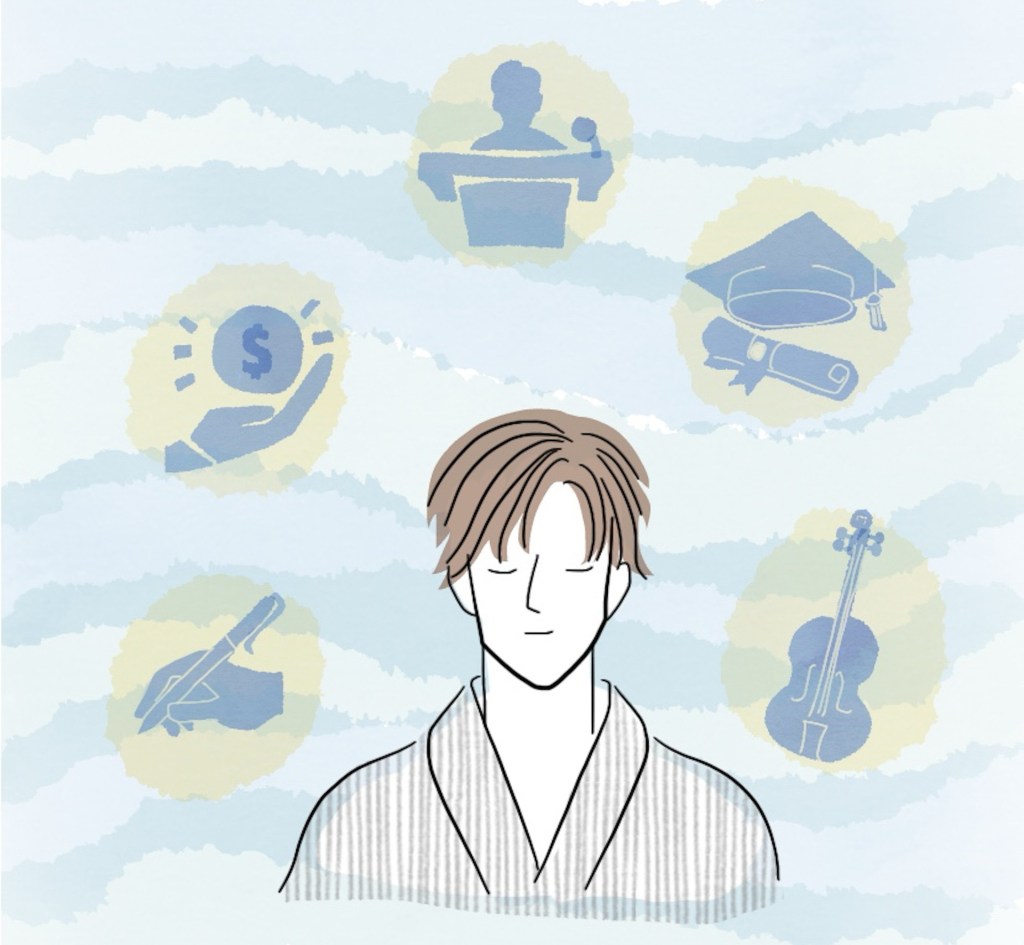
Juggling these three ideals today can be tricky.
I write about idealism today because I was thinking about the gaps in Singaporean youth brought about by society or moulded in them through influential others like their parents. Idealism is lacking in Singaporean youth as opined by Kishore Mahbubani. He bemoans the lack of Singaporean change activists who have a vision to improve the world, and speaks of his own personal experience studying an additional year of philosophy at university, crediting it to his stellar performances at debating.
What explains this idealism gap? Perhaps it is brought about by the pragmatic orientation our society has internalised. Our society very much values pragmaticism over idealism, with us spending our childhood studying for exams so that we can qualify for vaunted university programmes which grant us bright futures instead of working on personal projects (If we have the time or space for such).
I think this stems from our parents’ time. Theirs was an era where idealism seems a pipe dream. Their dreams and aspirations were concerned with giving their family a better life. Plus in our Chinese culture, some of us where we were brought up to worship the God of prosperity and also ingrained in our customs like exchanging red packets during Chinese New Year. While that is not wrong in itself, perhaps its time for us as a society to level up our aspirations, because life cannot just be about bread-and-butter pursuits.
Doing what you love and making money may not always be convergent paths. But they need not be. I believe that idealism is a necessary ingredient for success in your chosen field. Increasingly, people today want to work for a purpose-a sense of contributing to a greater good. Chasing happiness and purpose-deep intrinsic goals- makes one more satisfied in life than materialistic pursuits. Think about it, on your deathbed, would you have regretted not chasing your passion in life such as the pursuit of knowledge or improving people’s lives incrementally?
Why follow the path of Idealism
- Idealism or dreams are the kind of positive energy needed to bring about change
- As cliche as it sounds, the old adage holds true: Find something you are excited about and you never need to work a day in your life
- Don’t let your dreams just be dream, pursue and actualise them
But the pragmatic in you says, money is important. Its up to each individual to define their priorities in life. To me, money is not the primary engine which drives my motivation. Passion and my signature strengths are. Perhaps I am speaking from a position of relative privilege as I say this, because I wish to iterate that it is not wrong to have money be your driver too. Every one of us has different focuses and thats what makes each of us special and our lived experiences unique to each individual.
Lim Soong. Guan touched on Sir John Glubb’s age of affluence in his book “Will Singapore Fall?”
I would argue that with the age of affluence, people are no longer as constrained as by the scarcity mindset to pursue idealistic goals. Such goals would over take or even marry pragmatic goals of earning a lot of money or becoming famous.
I believe without the constraint of having to make a living, people would pursue happiness and satisfaction over materialism. The reason is an emotional and existential one and people pursue happiness for happiness sake, the relationship between happiness satisfaction in life, positive thinking, flow and grit, and purpose and meaning is intertwined and form positive feedback loops.
Maslow’s hierarchy of needs where Interest, passion, deliberate practice, meaning making, life goals, matter to people who are discovering themselves and how they want to devote their life work towards. To me, discovering your passion is the penultimate cheat code to life. Time flows by effortlessly and there is an indescribable quiet focus where all time has ceased to matter. The fruit of this endeavour is the process and the product.
Can you learnt to enjoy flow pursuits? When we break down a task into its processes, we generally find that there is an inertia at the initial stage, which we can overcome with willpower.
Once you get into the flow state you generally start being so engrossed into your task that all other things cease to matter.
That to me is the epitome of hard work, concentrating so much that having your work consume your every fibre of being is your penultimate goal in life and one where the fruits of your labour may contribute to furthering humankind’s advancement.
 The Asian Opinion